
Publication Date
9-2025
Files
Download Full Text (381 KB)
Abstract
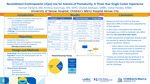
Background: Anemia is a common disorder of prematurity secondary to limited blood volume, excessive blood draws, inadequate nutrition, poor iron reserves, and insufficient endogenous erythropoietin. While many NICUs use recombinant erythropoietin (rEpo) to treat anemia of prematurity, the absence of universal guidelines has led to variability in dosing and schedules. Here we present our experience on the use of rEpo in a level 3 NICU. Our unit protocol uses 400 IU/kg three times a week for a total of 9 doses if hematocrit < 30%. Objectives: The purpose of this study was to evaluate the response to rEpo in infants with anemia of prematurity. Methods: Charts of infants born between 2018 and 2020 with gestation ≤34 weeks who received rEpo for anemia of prematurity were retrospectively reviewed. We defined response to therapy as an increase of hematocrit by 5% from pre-treatment baseline. Infants who did not achieve the therapeutic goal or who received blood transfusions were considered non-responders. Neutropenia, thrombocytopenia, and retinopathy of prematurity (ROP) requiring treatment were treated as adverse events. Results: A total of 44 infants were treated with rEpo during the study period. Clinical characteristics are described in Table I. Average hematocrit at birth was 44.8±7.5 (32.7 to 60.8). Infants were started on rEPO at a median corrected age of 33.3 ±3 weeks and a weight of 1674±622 g. Average DOL was 37±18 at initiation of therapy. Average baseline hematocrit at the start of therapy was 27.9±1.8%. 80% of patients (35/44) responded with increase of hematocrit by >5%, 20% (9/44) did not respond. 75% of infants (33/44) received all 9 doses. 11 patients received between 1-8 doses. Reasons for discontinuation of rEpo were: discharge prior to therapy completion (36%, 4/11), blood transfusion (27%, 3/11), neutropenia (27%, 3/11), and ROP progression (9%, 1/11). Average increase of hematocrit in the responders was 7.3±2.9%. In all, 11.4% of patients (5/44) developed neutropenia- none with ANC< 500 neutrophils/µl. None developed thrombocytopenia but 13.6% (6/44) had thrombocytosis >450,000 platelets/µl. 4.5% (2/44) required treatment for severe ROP, and no deaths occurred. Conclusion: rEpo was efficacious in increasing the hematocrit in the majority (80%) of convalescent preterm infants. Neutropenia observed during the therapy was mild-to-moderate (between 501-1500 neutrophils/µl) and did not result in invasive sepsis. Larger prospective comparative-dosing studies are needed to determine the ideal dose and timing of rEpo therapy in growing preterm infants to prevent late blood transfusions.
Disciplines
Pediatrics
Recommended Citation
Darland, Hannah; Dummula, Krishna; Mahajan, Chaitali; and Pandey, Vishal, "Recombinant erythropoietin use for anemia of prematurity: a three year since center experience" (2025). Posters. 478.
https://scholarlyexchange.childrensmercy.org/posters/478



Notes
Presented at the Midwest Society for Pediatric Research 2025 Annual Scientific Meeting; Chicago, IL; September 17-19, 2025.