
Publication Date
11-2025
Files
Download Full Text (708 KB)
Abstract
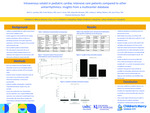
Background: Sotalol is an antiarrhythmic for which an intravenous (IV) form became available in 2015. Studies suggest it is safe and effective for treating pediatric arrhythmias, with fewer effects on physiologic parameters and cardiac output than amiodarone, and it does not appear to be associated with its long-term risks. However, data in pediatric patients remains limited. This study aimed to characterize the use of intravenous sotalol in pediatric intensive care admissions and compare its use and outcomes with intravenous amiodarone and procainamide. Methods: Data were drawn from the Pediatric Health Information System across six hospitals with the highest IV sotalol use (October 2015 to December 2019). Included were admissions of pediatric patients who received intravenous sotalol, amiodarone, or procainamide. Collected variables included demographics, arrhythmias, congenital heart disease, length of stay, and mortality. Trends were analyzed by year. Multivariable regressions were conducted to model length of stay and mortality with various clinical variables and antiarrhythmic medications included as independent variables. Results: Of 927 admissions, 128 (14%) received sotalol, 660 (71%) amiodarone, and 139 (15%) procainamide. Cardiac surgery was least common in the sotalol group (p< 0.01). Sotalol and amiodarone use both increased over time (p=0.03 and p< 0.01) (Figure 1). Supraventricular tachycardia was the most common arrhythmia (Table 1). Mean length of stay (days) was shortest with procainamide (21.8), followed by sotalol (22.7), and amiodarone (29.5) (Figure 2). Inpatient mortality was lowest with sotalol (5.4%) and highest with amiodarone (13.1%) (p=0.02) (Figure 3). Regression analysis demonstrated no independent association between sotalol and length of stay (β = -0.2, p=0.83), while amiodarone was independently associated with increased length of stay (β = 8.4, p< 0.01). Sotalol was linked to decreased mortality (OR = 0.95, p=0.04) and amiodarone with increased mortality (OR = 1.1, p< 0.01). Procainamide showed no significant associations. Conclusion: Intravenous sotalol use in pediatric intensive care patients was associated with lower inpatient mortality and comparable length of stay compared to amiodarone and procainamide after regression analyses. These results support that intravenous sotalol is a safe alternative for pediatric arrhythmia management, meriting further prospective studies.
Disciplines
Cardiology | Pediatrics
Recommended Citation
Loomba, Rohit S.; Backes, Emily R.; Farias Torres, Juan; Borquez, Alejandro; Malloy-Walton, Lindsey; and Flores, Saul, "Intravenous sotalol in pediatric cardiac intensive care patients compared to other antiarrhythmics: insights from a multicenter database" (2025). Posters. 488.
https://scholarlyexchange.childrensmercy.org/posters/488



Notes
Presented at the American Heart Association Scientific Sessions 2025; New Orleans, LA; November 7-10, 2025.