
Publication Date
4-2026
Files
Download Full Text (234 KB)
Abstract
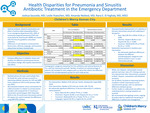
Optimal antibiotic selection and duration are pillars of antimicrobial stewardship efforts. In our emergency department (ED), >80% of community acquired pneumonia (CAP) and acute bacterial rhinosinusitis (ABRS) are treated with first-line (FL) guideline-concordant antibiotics. Differences in care based on socioeconomic factors (race, ethnicity, language, and insurance status) have not been characterized. We sought to compare differences in antibiotic choice and duration for different socioeconomic factors, and analyze changes after quality improvement (QI) efforts. Multidisciplinary QI team used multiple Plan- Do-Study-Act cycles and was successful in improving antibiotic duration for CAP and ABRS from a baseline of 13% to 61% (January 2024- July 2025). We evaluated antibiotic choice and duration for 2,943 encounters in relation to socioeconomic variables and compared the 17-month pre-intervention period (August 2022-December 2023) to the 19-month post-intervention period. Chi square test used to evaluate the differences using IBM SPSS software. Pre-intervention: Median of 45 visits per month, interquartile range (IQR): 39,63, Post-intervention: Median of 82 visits per month, IQR: 70,118. No statistically significant differences in the pre-intervention FL antibiotic choice between: Races: Black 85.6% vs White 79.5%, p = 0.063, Ethnicities: Hispanic 82.8% vs non-Hispanic 81.1%, p = 0.552, Insurances: Medicaid 83.1% vs Private 79.7%, p = 0.211, Languages: Spanish 82.3% vs English 81.5%, p=0.84.Disproportionate improvement in FL selection in the post-intervention period with widening of the gap for: Race: Black 89.5% vs White 79.2%, p < 0.001, Ethnicity: Hispanic 88.4% vs non- Hispanic 83.1%, p = 0.004, Insurance: Medicaid 85.3% vs Private 81.2%, p = 0.024. Substantial improvement in duration post- intervention. No statistically significant differences between the different sociodemographic categories with optimal duration in pre- or post-intervention periods. White, non-Hispanic, and privately insured patients had lower rates of FL therapy and saw less improvement after interventions compared to Black, Hispanic, and patients with Medicaid insurance. Our QI efforts, focused on improving duration, resulted in similar improvement across socioeconomic groups, with no substantial differences between groups. Further studies to understand and address the underlying factors creating inequities are essential. We recommend interrogating current, ongoing QI project data for inadvertent worsening of differences in patient care management
Disciplines
Emergency Medicine | Infectious Disease | Pediatrics
Recommended Citation
Saucedo, Joshua; Hueschen, Leslie; Nedved, Amanda; and El Feghaly, Rana MD, "Health Disparities for Pneumonia and Sinusitis Antibiotic Treatment in the Emergency Department" (2026). Posters. 525.
https://scholarlyexchange.childrensmercy.org/posters/525



Notes
Presented at the 2026 Pediatric Academic Societies (PAS) Annual Meeting; Boston, MA; April 24-27, 2026.