Files
Download Full Text (882 KB)
Publication Date
5-2025
Abstract
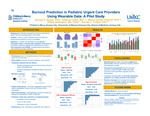
Burnout is a critical issue among healthcare providers, especially in high-stress environments such as pediatric urgent care (PUC). Existing tools, like the Maslach Burnout Inventory (MBI), tend to identify burnout after it has occurred. This study aims to leverage wearable technology to predict burnout before its onset, using biometric data to facilitate timely interventions. This observational study will explore the application of several machine learning (ML) models to biometric data collected from Garmin Venu 3 smartwatches, with the goal of determining the best predictive approach for burnout. Up to 50 medical providers from three PUC sites will wear Garmin Venu 3 devices for six months, with biometric features (e.g., heart rate, sleep patterns, stress, and activity levels) synced via the Garmin Health API. Participants will also complete the Maslach Burnout Inventory (MBI) surveys at baseline, 6 weeks, 3 months, and 6 months. Multivariate (multi-level) functional data analysis will assess the predictive capacity of features such as heart rate, sleep, stress, and activity. Various ML models, including linear and non-linear approaches (e.g., Random Forest, Support Vector, XGBoost, Linear Discriminant Analysis), will be compared to identify the optimal model for predicting burnout. Model performance will be evaluated using cross-validation, and predictive power will be assessed using area under the curve (AUC) and F1 score. Additionally, a Shiny application will be developed for real-time data visualization and result exploration. The findings from this study will contribute to the developmen
Keywords
Burnout, Wearable Technology, Machine Learning, Pediatric Urgent Care, Multivariate Functional Data Analysis, Predictive Modelling
Document Type
Poster
Recommended Citation
Quaye, George E.; Leabo, Addison; Leeder, J Steven; Fridley, Brooke L.; and Addington, Tiffany, "Burnout Prediction in Pediatric Urgent Care Providers Using Wearable Data: A Pilot Study" (2025). Research at Children's Mercy Month 2025. 2.
https://scholarlyexchange.childrensmercy.org/research_month2025/2