
Publication Date
2-2026
Files
Download Full Text (429 KB)
Abstract
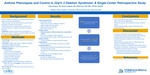
Background: Patients with 22q11.2 deletion syndrome have increased rates of atopy and immune dysregulation and may experience a higher burden of asthma; however, real-world data describing asthma control, severity, and treatment patterns in this population are limited. We hypothesized that asthma control and severity patterns in patients with 22q11.2 deletion syndrome differ from those observed in the general asthma population. Objectives/Goal: To characterize asthma control, severity, and treatment patterns among patients with 22q11.2 deletion syndrome and to compare observed patterns with those typically reported in the general asthma population. Methods/Design: We conducted a retrospective observational cohort study of patients with 22q11.2 deletion syndrome and a provider-diagnosed history of asthma at a single tertiary care center. Data was extracted from electronic medical records and included demographics, asthma severity classification, Asthma Control Test (ACT) scores, oral corticosteroid (OCS) use, inhaled controller therapies, comorbid pulmonary conditions, hospitalizations, biologic therapy use, and asthma-related mortality. The primary outcome was asthma control, defined as a mean ACT score < 20 and/or receipt of two or more OCS courses in the preceding 12 months. When available, the three most recent ACT scores were averaged from the most recent assessment. Results: Of our 512 patient cohort, 92 patients (18%) with 22q11.2 deletion syndrome were diagnosed with asthma. Overall, 20% met criteria for uncontrolled asthma at their most recent evaluation. Among the cohort, 23% had moderate or severe persistent asthma. Eight percent required two or more courses of oral corticosteroids in the prior 12 months. ACT scores were available for 50% of patients; among those with documented ACT data, 28.3% had a mean ACT score < 20. Patients were more frequently treated with medium-dose inhaled corticosteroids alone (n=24) compared with combination inhaled corticosteroid–long-acting beta agonist (ICS–LABA) therapy (n=12). No patients received biologic therapy, and there were no asthma-related deaths. Conclusions: In this single-center cohort of patients with 22q11.2 deletion syndrome, nearly one in five were diagnosed with asthma. Further, one in five individuals with asthma demonstrated uncontrolled disease, and nearly one-quarter had moderate to severe persistent asthma. Despite this, combination ICS–LABA therapy and biologic agents were infrequently utilized. These findings suggest a potential treatment gap and raise important questions regarding asthma phenotype, pulmonary comorbidities, and optimal controller strategies in this population. Future prospective studies incorporating pulmonary function testing, inflammatory biomarkers, and standardized asthma assessments are needed to better characterize disease mechanisms and improve asthma outcomes in patients with 22q11.2 deletion syndrome.
Disciplines
Allergy and Immunology | Pediatrics
Recommended Citation
Shopper, Cody; Campbell, Katey; and Raje, Nikita S., "Asthma Phenotypes and Control in 22q11.2 Deletion Syndrome: A Single-Center Retrospective Study" (2026). Posters. 504.
https://scholarlyexchange.childrensmercy.org/posters/504



Notes
Presented at 2026 American Academy of Allergy Asthma & Immunology (AAAAI) Meeting; Philadelphia, PA; February 27-March 2, 2026.