
Publication Date
4-2026
Files
Download Full Text (389 KB)
Abstract
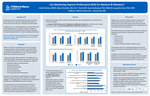
Introduction/Background: We implemented a structured 10-month mentoring program at our pediatric academic hospital designed to assist faculty in actualizing professional and personal goals through developing trusted, mutually rewarding relationships. Goals/Hypothesis: To evaluate if faculty participants in the 2 inaugural mentoring program cohorts improve scores on 6 behavioral competencies related to maintaining effective communication, aligning expectations, assessing understanding, addressing diversity, fostering independence, and promoting professional development. Methods/Approach We used pre- and post-program Mentoring Competency Assessments to assess changes in 26 skills across 6 competencies and gather feedback on program elements from participants. Results/Outcomes: 19/35 (54%) mentees and 15/29 (52%) mentors completed both assessments. 20/26 rated skills across 6 competencies significantly increased for mentees (p < 0.05), while 4/26 rated skills across 6 competencies significantly improved for mentors. Overall, 89% of mentors and 87% of mentees agreed the program was worth their time to participate. Conclusion/Impact: Program was successful in helping mentees improve most skills across all 6 competencies, whereas mentors saw minimal improvement in skills. Both mentors and mentees reported the program helped them build professional relationships and was worth their time to participate. Future efforts will focus on obtaining assessments and enrolling more participants.
Disciplines
Medicine and Health Sciences
Recommended Citation
Keeton, MSOD, Emilie; Chandler, Myles; Rush, Eric T.; Hathaway, Susan B.; and Hill, Jacqueline, "Can Mentoring Improve Professional Skills for Mentors and Mentees?" (2026). Posters. 510.
https://scholarlyexchange.childrensmercy.org/posters/510
Notes
Presented at the AAMC 2026 Group on Business Affairs (GBA), Group on Institutional Planning (GIP), Group on Faculty Affairs (GFA) Joint Meeting, St. Louis, Mo., April 22-24, 2026.